
Welcome to the subtropics
Another warm autumn keeps everything growing

The last month has been warmer than any similar period that I can remember, surpassing even last year. Here’s a few of the things I spotted today walking around one of our forest gardens:
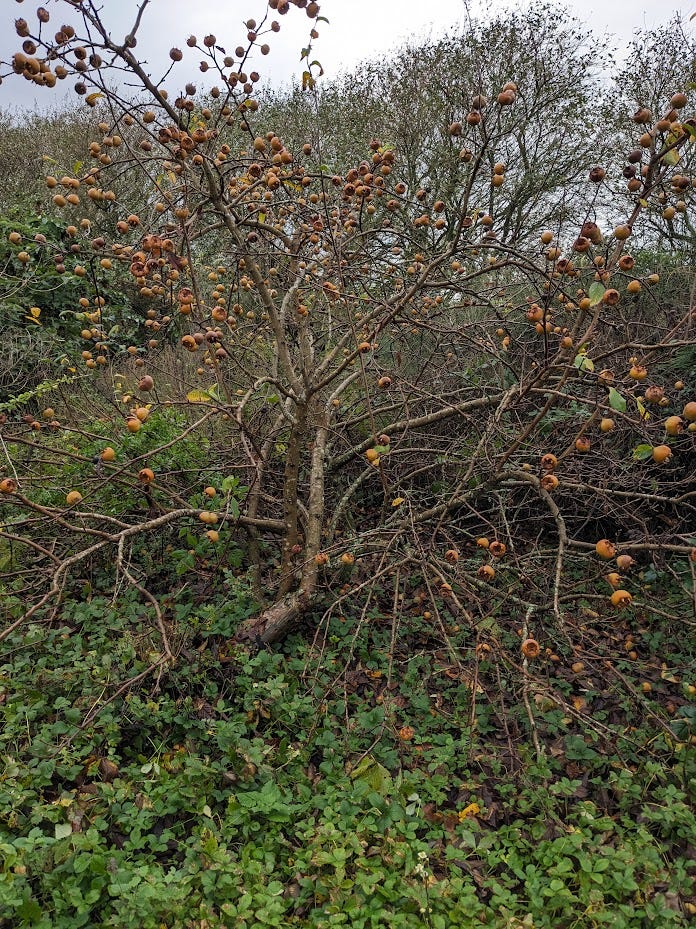
Medlars ripening on the tree. We haven’t had any frosts in the last month so it’s just the warmth that has ripened them.
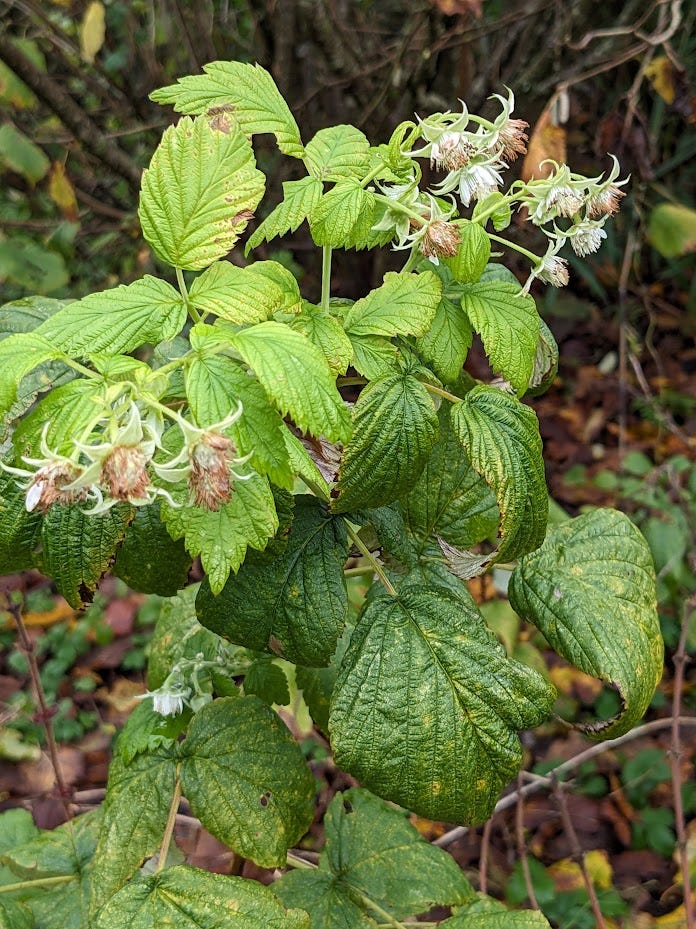
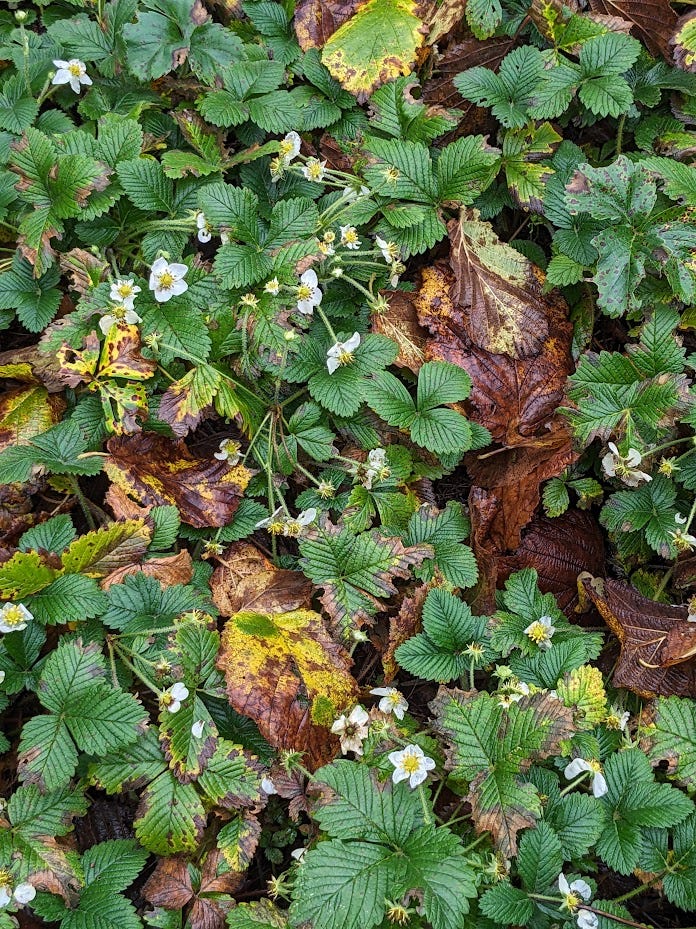
Raspberries and strawberries flowering. They won’t come to anything of course but the plants are confused enough to give it a try.
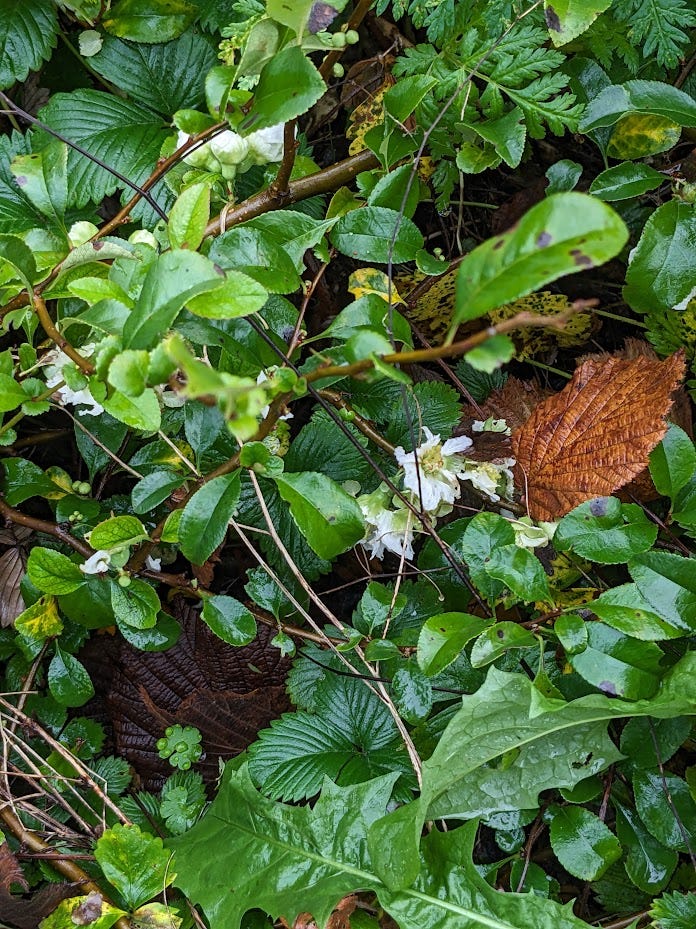
Also flowering is Japanese quince (Chaenomeles). Its certainly warm enough for bees to be around (16 C today) although the rain has put them off.
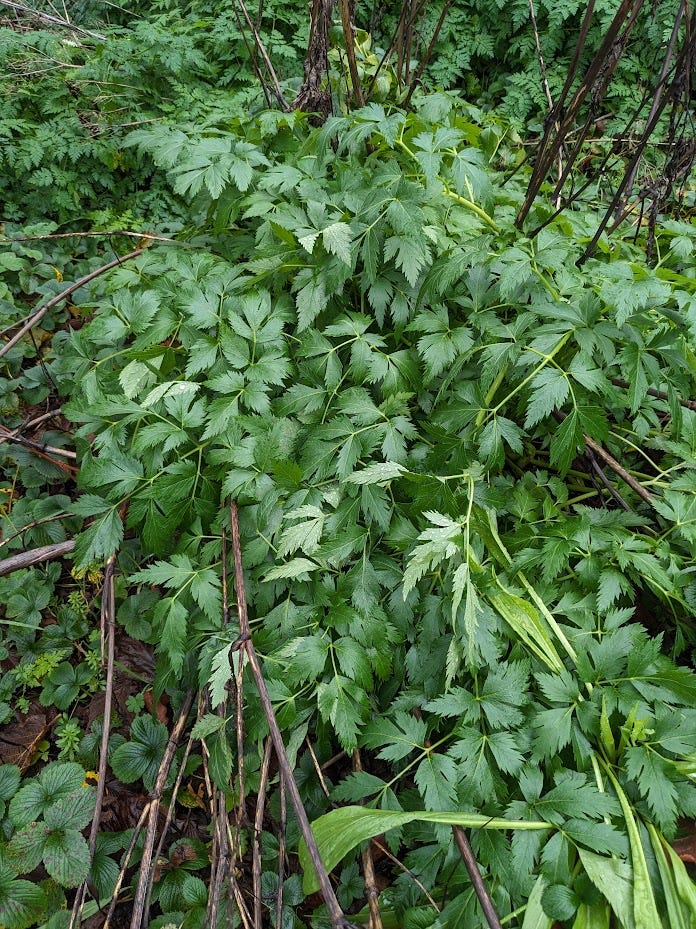
Korean celery (Dystaenia) is looking lush. Behind it here you can spot sweet cicily also looking good. In front the edible leaves of Scorzonera.
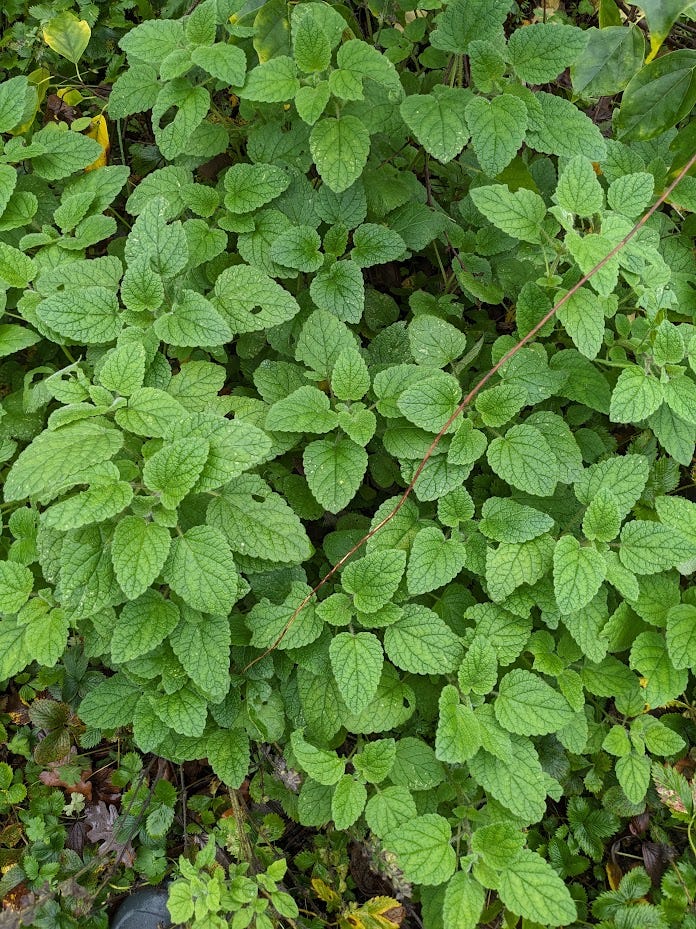
Mandarin balm (Melissa ‘Mandarina’) is not showing any signs of going dormant. This variation of lemon balm with mandarin-flavoured leaves is lower and more spreading and makes a better ground cover.
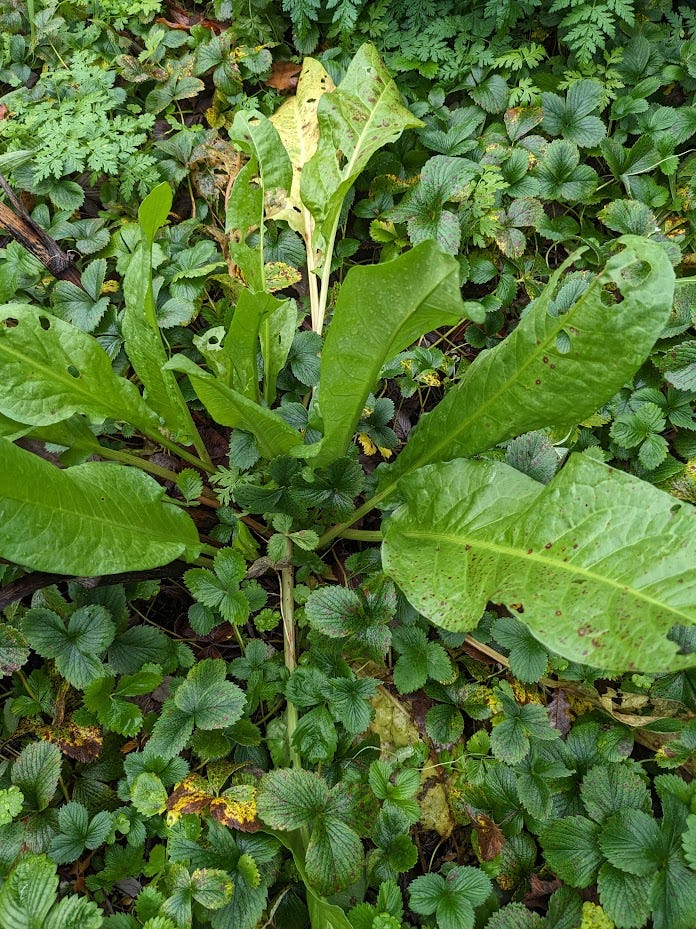
Monk’s rhubarb (Rumex patienta) putting up new leaves. Although they look suspiciously dock-like, the leaves of this species are a really good sorrel.
Here in Devon we’re not really subtropical yet, but our winters are getting so mild that a minimum in winter of -2 or -3 C means that the character of some plants is changing: some herbaceous plants are becoming evergreen, a case in point being wild strawberries (eg. Fragaria moschata and Fragaria vesca) which were reliably herbaceous 30 years ago. Others, like some of the above, are getting a whole new flush of growth in late autumn. Some deciduous trees are holding on to their foliage really late - until December or January. Each year brings some new surprises, and no-one has researched which plants are likely to change behaviour: at least we know that we don’t know what is going to happen in the next 10 or 20 years. Welcome to climate change!
Even here on the Belgium/NL/Germany triple point, which is way more continental, we have yet to see the first frost this autumn. Which is remarkable, as usually the first slight frost on ground level appears in early October or even late September. This of course causes all kinds of strange flowering patterns. More southernly oriented plants like salvias and rosemary seem to love the high temperatures though. Many are in flower, we even have a flowering potted Satsuma Mandarin. As the temperature climbs to 17-18 Celcius in Sunny weather, bees are still having their way with them. Welcome to the subtropics Indeed!
We've got plenty of medlars here in Somerset, great growth on overwintering crops and winter salad in the polytunnel, brassicas suffering from large numbers of cabbage white caterpillars and strawberry plants with fruits almost ripe and ready to eat